The American Chiropractic Association (ACA) launched a Health Policy Fellowship one year ago to educate doctors of chiropractic about health policy, coding and other complex issues and to prepare them to advocate on behalf of the profession. As part of their training, fellows get first-hand experience “behind the curtain” of the American Medical Association (AMA) procedures for developing and valuing physical medicine codes by regularly attending Current Procedural Terminology (CPT) meetings and observing related discussions.
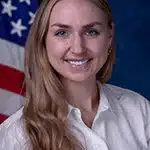
The ACA blog caught up with one of three ACA members who participated in the first fellowship cohort, Morgan Price, DC, to learn more about her experience. Dr. Price is a staff chiropractor at the Veterans Administration (VA) at Puget Sound Health Care System, Seattle Division. She also serves as an expert witness in medical legal record review.
Q: What initially interested you in the fellowship?
I wanted to have a deeper understanding of how ACA advocates for us. I also wanted to know more about some of these bigger arenas they are involved in that I don’t think are well known. There is a lot of behind-the-scenes work! I wanted a better understanding of that and, personally, a deeper understanding of how coding works to better position myself for both my day-to-day clinical work and in the medical legal world.
Q: You worked in medical legal record review previously. Did that have any bearing on your interest in coding valuation and documentation?
Definitely. I think that it introduced me to a world where, normally, if I was just in clinic I would not have as much interest. I’ve been doing it for five years now, and it was probably the jumping off point for me to pursue something like this [fellowship], which is a little more in depth than contextual learning.
Q: How familiar were you with coding, documentation and AMA’s process before?
I would say, in terms of the billing and coding, I was pretty familiar with it. But in terms of the process itself, with how a code becomes a code and the way that AMA represents the profession and everything they do for us — and even the process of who can introduce a code and how it is approved along the way and introduced to other codes — was very new.
Q: What did you find surprising or especially helpful about the content of the fellowship?
I think that [fellowship mentors Drs. Leo Bronston and Kris Anderson] are the best people to deliver this information. They both have a deep understanding and have been doing this for a long time. They are very happy to share these experiences. This process can be very procedural, yet they make it easy to understand and digestible.
Q: As part of your training, you attended CPT meetings. What did you take away from those first-hand encounters with the AMA process and chiropractic’s participation in it? There is a lot of feedback that goes into it from a lot of different healthcare specialties—not just the specialty that is requesting a code. There are a lot of opportunities for constructive criticism along the way. Dr. Bronston has the confidence and the ability to weigh in on situations that we are not directly involved in, but that are still relevant enough to chiropractic. He does a lot.
Q: What was the best part of the experience?
I really enjoyed meeting people, seeing the process, and peaking behind the curtain. I wish more people would get to experience that. I think having Dr. Anderson and Dr. Bronston as mentors was a unique experience. They are busy, so to get that one-on-one time with them is really valuable. The best way to learn [about the coding valuation process] is by having someone hold your hand and show you how it works.
Q: What was the most challenging part of the experience?
I think coming into it with little knowledge was challenging, because the process is quite complex. There are a lot of different people, communities and entities involved, and most people don’t have foundational knowledge and [awareness of] the nitty-gritty details of the process. I think wrapping your head around that, and the new terminology and the sequential part of it, was a learning curve.
Q: What advice would you give others who might be interested in the fellowship but aren’t sure whether they are qualified?
This is a great learning experience. Let [ACA] decide who they are looking for. The three of us who participated in the fellowship have very different backgrounds. I think we will utilize the knowledge in different ways. They purposely leave [the requirements] open-ended to attract a variety of candidates. And then, from the interview and application process, they decide. Don’t count yourself out! This is a new and unique opportunity.
Q: What’s next for you?
I’ve recently started as the alternate advisor for the AMA’s CPT Health Care Professionals Advisory Committee (HCPAC). Della M. Schmid, DC, MS, who also completed the fellowship, is the main chiropractic advisor. So the two of us will be working together to assist Dr. Bronston, who is still leading the entire committee. It’s nice to have more of us involved, to help them out. We will also be involved in content delivery and content creation for the fellowship moving forward, giving assistance and delivering the best learning experience we can for the next group.
